

Table of Contents
- Why Carrying Two Bags Is Killing Your Commute
- Why Backpacks Fail on the NYC Subway
- What to Look for in a Commuter Bag for Work and Gym
- How to Pack for Gym and Work in One Bag
- Frequently Asked Questions
Last Updated: October 2, 2026
Why Carrying Two Bags Is Killing Your Commute
A commuter bag for work and gym solves a problem that thousands of New York City professionals face every single morning: hauling a laptop bag in one hand and a gym duffel in the other. This guide from Mesta - New York breaks down why that daily double-carry is so draining, and how a single well-designed bag fixes it. If you ride the subway, walk blocks between stations and your office, and still want to train before or after work, two bags turn a straightforward commute into a logistical headache.
The math is simple. Two straps dig into one shoulder. One bag always ends up in your hand, which means no coffee, no phone, no handrail.
There's a better way to move through the city. Below, we'll show you exactly how to pack for gym and work in one bag, what to demand from the bag itself, and why a structured tote beats the alternatives.
Why Backpacks Fail on the NYC Subway
Backpacks are the default commuter choice, and on a packed subway car they're the wrong one. Backpacks crush the shoulders of a quality suit, they leave sweat stains on your back, and they prevent you from sitting down on the subway. When standing, they also must be carried by hand in crowded cars to avoid hitting others.
There's a style problem too. A technical backpack reads as casual no matter how much it costs, and it looks out of place in a client meeting or a Midtown lobby. You don’t want to walk into a boardroom and remove your backpack- you’ll look like the intern.
A commuter bag for work and gym needs to survive the subway and still look appropriate when you walk into the office. That's a narrow brief, and most bags miss it.
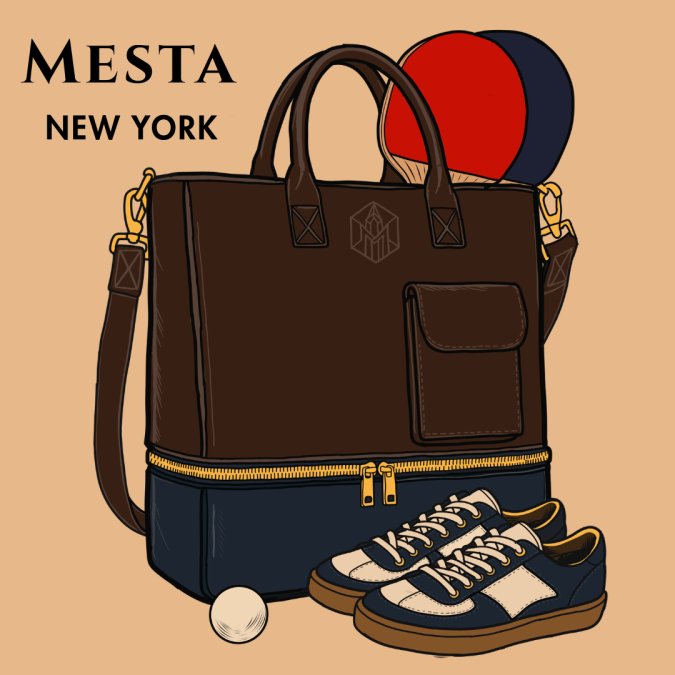
The fix is a bag that reads as a proper office bag first and a gym bag second. The Manhattan by Mesta - New York draws on Art Deco heritage, which gives it a polished, architectural look, structured, composed, and appropriate in a meeting or on the street.
What to Look for in a Commuter Bag for Work and Gym
The right bag balances four things: shoe separation, laptop protection, comfortable carry, and a look that works in professional settings. Get those right and the work-to-gym transition stops being a chore.
Look for a dedicated shoe compartment that keeps footwear away from everything else, a laptop sleeve sized to your machine, straps or handles that distribute weight, and materials that hold up to daily abuse.
Dedicated Shoe Compartment and Ventilation
A dedicated shoe compartment is the feature that makes a single-bag commute possible. It keeps your shoes from ever touching your clothes, your laptop, or your lunch.
Ventilation is what separates a real shoe compartment from a plastic-lined pocket. Without airflow, damp shoes sit in trapped moisture and the whole bag starts to smell within weeks. The Manhattan, by Mesta - New York, uses a ventilated, ample, dedicated shoe compartment paired with a wipeable lining, so the interior stays clean and odor doesn't migrate into your work clothes.
Laptop Protection and Interior Organization
Your laptop is the one item that can't be compromised. A dedicated sleeve keeps it in place when the bag gets knocked around on a crowded platform.
Interior organization matters just as much. Quick-access pockets let you separate chargers, a notebook, and your phone without digging. A structured tote holds its shape, so the bag still looks composed after a full day of use, and it carries by the handles, on one shoulder, or crossbody with an adjustable strap.
How to Pack for Gym and Work in One Bag
Packing well comes down to order, separation, and airflow. Shoes go in the ventilated compartment first, then gym clothes, then work items, then anything you need to reach quickly. Pack the same way every morning and it takes two minutes.
- Shoes: into the dedicated ventilated compartment, always
- Gym clothes: t-shirt, shorts, socks, small towel go below as well (consider rolling them and placing them into the shoes for space)
- Laptop: into the dedicated sleeve
- Work essentials: notebook, chargers, mints, tissues, lanyards, pens
- Quick-access items: transit card, headphones, keys in an outer pocket
The Odor Problem Nobody Talks About
Damp gym clothes and worn shoes carry moisture and bacteria. Sealed inside a closed bag overnight, that moisture migrates into fabric, zippers, and stitching, and the smell settles into the lining.
A practical routine that most commuters settle into:
- Empty the shoe compartment the moment you get home. Do not leave shoes in the bag overnight.
- Wipe the lining with a damp cloth and let the bag sit open for an hour.
- Turn gym clothes inside out and let them air before they go in the laundry.
- Once a week, leave the shoe compartment unzipped overnight so airflow reaches the interior.
- Keep a small cedar or charcoal sachet in the shoe compartment between uses.
The Mistake That Costs You the Bag
The five above are recoverable. This one is not: leaving damp gear sealed in the bag overnight, every night.
Here is the mechanism. Sweat and skin cells stay on gym clothes and inside shoes. In a closed bag, that moisture has nowhere to go, so it wicks into the lining, the zipper tape, and the seams.
A wipeable lining breaks that cycle. It does not absorb sweat, so a damp cloth after each workout removes the residue before it sets.
The fix is a bag that reads as a proper office bag first and a gym bag second. The Manhattan by Mesta - New York draws on Art Deco heritage, which gives it a polished, architectural look, structured, composed, and appropriate in a meeting or on the street.
Frequently Asked Questions
What is the best bag for both work and the gym?
A structured tote with a dedicated, ventilated shoe compartment works best. It keeps gym gear separate from work items while looking professional. Look for a wipeable lining, a padded laptop sleeve, and a design that transitions from the office to the street. The Manhattan by Mesta - New York is built for this exact purpose.
How do I keep my gym shoes separate from my work documents?
Use a commuter bag with a dedicated shoe compartment that is ventilated and lined. This prevents odors and moisture from reaching your laptop, papers, or clothes. The Manhattan features an ample, ventilated shoe compartment that keeps shoes completely isolated from everything else in the bag.
Is a tote bag better than a backpack for professional commuters?
For many NYC commuters, yes. Backpacks can crush suit shoulders, leave sweat stains on your back, and force you to remove them to sit or stand on the subway. A tote like The Manhattan can be carried by the handles, worn on one shoulder, or worn crossbody, keeping your professional look intact.
How can I carry gym gear to work without looking unprofessional?
Choose a bag that looks like a work bag first. The Manhattan has an Art Deco-inspired design that suits office settings, with a separate ventilated compartment for shoes and gym clothes. For light gym use, it fits a pair of shoes, t-shirt, shorts, socks, and a small towel without bulging.
Two bags on a New York City commute is a daily tax on your time, your shoulders, and your patience. Carrying one well-designed bag removes it entirely. Mesta - New York builds The Manhattan as a two-tier tote with a ventilated, ample shoe compartment, a wipeable lining, and a structured Art Deco silhouette that works in the office and on the street. Get started with Mesta - New York and move through your commute with one bag, not two.